
Morning rush hour in Toronto rarely feels calm. Construction cones crowd the curb, lanes shift with little warning, and a single missed sign can trigger chaos. The stakes for safety and efficiency are high, especially in urban areas and active work zones where every moment counts and mistakes can be costly.
Why Road Safety and Efficiency Matter on Busy Roads
The High Stakes of Traffic Management
City streets and highways are arteries of daily life, but when they become clogged or hazardous, consequences ripple far beyond a single intersection. Motorists rely on clear guidance to navigate unpredictable detours, lane closures, and roadwork. For contractors and municipalities, effective traffic management is not just a regulatory box to check but a public safety imperative.
Common Challenges in Urban and Construction Zones
Urban density, constant maintenance, and complex detours can overwhelm traditional traffic control. Visibility drops in bad weather. Drivers face information overload amid a blur of cones, signs, and flaggers. In these moments, the smallest miscommunication can lead to gridlock or even injury.
Traditional Traffic Control Methods
Fixed Signage and Its Limitations
Permanent signs provide structure, but they cannot adapt to sudden changes or temporary disruptions. Weather-worn or poorly placed signs lose their effectiveness, and static messages can confuse drivers when lane patterns or routes shift unexpectedly.
Manual Flagging and Human Error Risks
Human flaggers remain essential in some scenarios, yet fatigue, distraction, and exposure to traffic put both workers and travelers at risk. Even highly trained crews cannot always match the precision and consistency that digital controls offer.
Standard Arrow Boards vs Portable Versions
Arrow boards help guide drivers through tapers or around hazards, but traditional models are often fixed to trucks or trailers. Their messages are limited to simple directional cues, and reprogramming typically requires a physical presence on site.
Portable Message Boards: Features and Capabilities
Types of Portable Message Boards
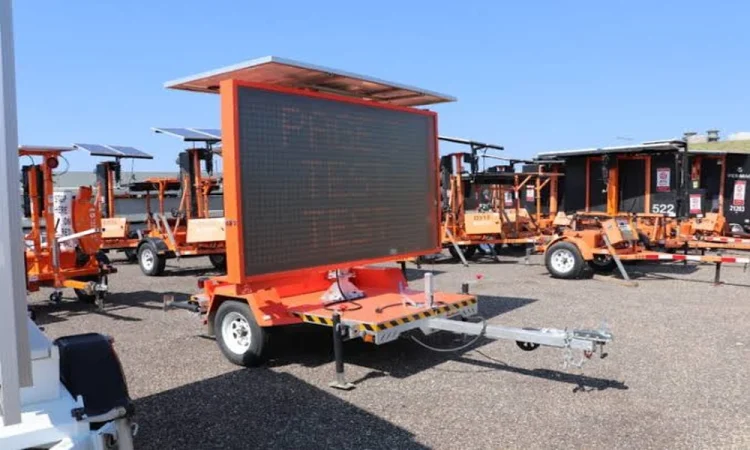
Recent innovations have made portable message boards more versatile than ever. Solar-powered units offer continuous operation without reliance on local power. Cellular-connected models can receive updates remotely, ensuring information stays current as conditions evolve.
Real-time Communication and Remote Updates
The ability to change messages in real time transforms traffic management. No more waiting for on-site staff to physically adjust signage, updates can be made from any location, increasing responsiveness during emergencies, weather shifts, or unexpected delays.
Compliance with Ontario Traffic Manual Book 7 Standards
Not all equipment is created equal. Every portable message board in the Salus Traffic equipment rentals fleet, for example, is inspected to meet Ontario Traffic Manual Book 7 specifications, ensuring consistent, high-visibility performance in any environment.
Comparing Portable Message Boards to Other Traffic Control Devices
| Feature | Portable Message Boards | Arrow Boards | Static Signs |
|——————————- |—————————- |——————-|———————|
| Message Customization | High (text, symbols, timing)| Low (direction only)| None |
| Remote Update Capability | Yes | Rarely | No |
| Power Source | Solar or battery | Battery, vehicle | None |
| Compliance (Book 7 ready) | Yes | Yes | Yes |
| Visibility in Poor Conditions | Excellent (LED) | Good | Variable |
Portable message boards stand apart for their adaptability and clarity, especially when compared to both arrow boards and static signs. Their bright LED displays cut through fog, rain, or nightfall. Unlike barricades or cones, they deliver more than a warning, they communicate details about what to expect next.
Impact on Safety: How Portable Message Boards Reduce Risks
Enhancing Driver Awareness in Variable Conditions
When weather, traffic volume, or construction phases change rapidly, portable message boards keep drivers informed with up-to-the-minute details, reducing confusion and sudden maneuvers.
Case Studies: Accident Reduction and Incident Management
Municipalities across Ontario have reported notable reductions in collisions in zones where portable message boards relay live updates about merging lanes or hazard locations. They also support incident management by warning of upcoming accidents or relocating traffic in emergencies.
Backup Power and Continuous Operation for Critical Alerts
Solar-powered units with battery backups help ensure messages remain visible through outages or overnight operations, a crucial advantage for long-duration projects.
Boosting Efficiency with Portable Message Boards
Streamlining Traffic Flow During Construction and Maintenance
Dynamic messaging smooths bottlenecks, reroutes traffic proactively, and reduces delays. Crews can schedule messages for different phases, keeping drivers prepared for evolving conditions.
Multi-phase Project Management and Dynamic Messaging
For projects that evolve over weeks or months, pre-programmed sequences and remote control allow traffic planners to react instantly as each stage unfolds.
Cost-effectiveness and Rental Flexibility
Temporary needs demand flexible solutions. Renting portable message boards means lower upfront costs and the ability to scale equipment up or down as projects demand.
Challenges and Considerations for Deployment
Technical Limitations and Environmental Factors
While robust, portable message boards still depend on reliable cellular signals and sunlight for optimal operation. Snow, vandalism, or poor placement can compromise visibility.
Proper Placement and Visibility Concerns
Strategic placement is key; boards must be set where drivers have enough time to react but not so distant that the information becomes irrelevant.
Training and Compliance Requirements
Operators must be trained to deploy boards in compliance with safety regulations and to use remote updating tools accurately.
Future Trends in Traffic Management Technology
Advances in Connectivity and AI Integration
The future points toward smarter networks, with AI analyzing traffic data to update boards automatically as congestion or hazards arise.
Potential for Automated Traffic Control Systems
Integrated systems may soon coordinate multiple message boards, signals, and barriers without direct human intervention, further reducing risk and delay.
Role of Portable Message Boards in Smart City Infrastructure
As cities evolve, portable message boards will remain a vital tool, bridging the gap between human oversight and automated traffic ecosystems, always adapting to keep people moving and safe.