

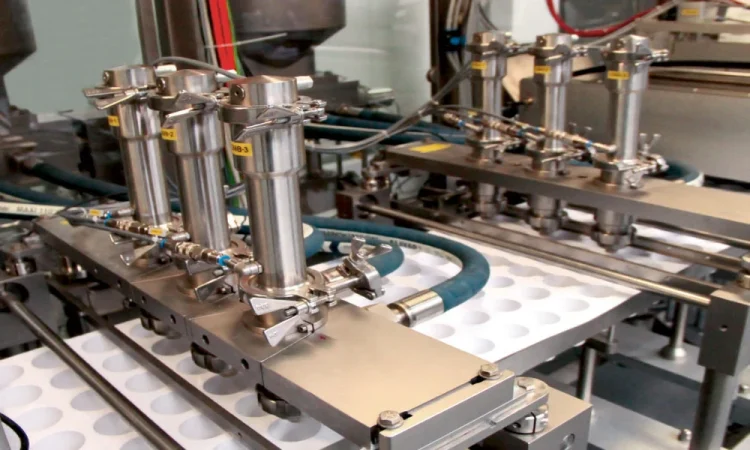
Margarine and shortening are often filled using equipment designed for general liquids, on the assumption that a fat-based product will behave similarly enough to pass through the same pumps and valves. In practice, temperature-dependent viscosity and a tendency to trap air make these products considerably harder to handle than most manufacturers expect. A margarine bulk filling machine is built around exactly these characteristics rather than adapted from a general-purpose liquid filler.
Why Fat-Based Products Behave Differently
Margarine and shortening shift from relatively soft to firm across a fairly narrow temperature band, which means a pump calibrated at one temperature can underperform or clog if the product cools even slightly during a production run. This sensitivity is far more pronounced than in most liquid products and needs to be designed for, not managed around. A production hall running slightly cooler on a rainy day can be enough to push a marginal setup into inconsistent fills.
Temperature Control Through the Filling Process
Jacketed hoppers and heated transfer lines keep the product within its optimal flow range from storage tank to filling head, preventing the partial solidification that causes uneven fills or blocked nozzles. Without this control, operators often resort to manually reheating sections of the line, which introduces its own inconsistency. Consistent temperature control also protects product texture, which matters for a category where mouthfeel is closely tied to consumer perception of quality.
Managing Air Entrainment During Filling
Fat-based products are prone to trapping air during mixing and transfer, which affects both the accuracy of volumetric fills and the visual quality of the finished product once packaged. Filling mechanisms designed for these products typically include de-aeration or gentler transfer paths specifically to minimise this issue. Excess trapped air can also cause a tub to appear underfilled even when the correct weight has been dispensed, which creates confusion during quality checks if the cause is not understood.
Hygiene Standards for Food-Grade Filling
Food production lines need equipment that meets sanitary design standards, with surfaces and seals that can be cleaned thoroughly between batches without harbouring residue in hard-to-reach joints. A food-grade fat filling line built to these standards reduces contamination risk and supports the audit trail food manufacturers are expected to maintain.
Accuracy for Tub, Block and Bulk Formats
Margarine is packaged in a wide range of formats, from small retail tubs to bulk catering blocks, and each format places different demands on fill accuracy and container handling. Equipment capable of adjusting fill volume and speed across this range without a major mechanical changeover saves considerable time for manufacturers serving both retail and food service customers. Quick-change nozzles and adjustable fill heads are usually the deciding factor in how much of that changeover time is actually saved in practice.
Reducing Waste From Product Changeovers
Switching between formulations, such as different fat blends or flavoured variants, requires a clean purge of the line to avoid cross-contamination, and a poorly designed system can waste a significant volume of product during that changeover. Efficient purge design keeps this waste to a minimum without extending changeover time unreasonably. Manufacturers running several variants through the same line on a single day should weigh purge waste specifically when comparing equipment, since it compounds quickly across multiple changeovers.
Consistency Across Long Production Runs
Temperature drift over a long shift can gradually change product viscosity even with heating in place, so consistent fill weight depends on monitoring and adjusting through the run rather than setting parameters once at start-up. This is one of the more common causes of fill-weight complaints in fat-based product lines. Logging temperature alongside fill weight throughout the shift makes it far easier to trace a complaint back to its actual cause rather than guessing after the fact.
Integration With Packaging and Labelling
Because margarine and shortening are often sold in retail packaging with tight branding and date-coding requirements, the filling station needs to pace reliably with downstream lidding, labelling and date-stamping equipment. Inconsistent fill timing upstream tends to show up as misalignment or delays further down the packaging line. A steady, predictable pace out of the filler is often the single biggest factor in keeping the whole packaging line running smoothly.
Maintenance Considerations for Fat-Handling Equipment
Heated components, seals exposed to fat-based products, and de-aeration systems all need routine inspection, since a failure in any one of them tends to show up first as an inconsistent fill rather than an obvious equipment fault. Scheduling this maintenance proactively avoids the kind of quality drift that is only caught after a customer complaint, which is a considerably more expensive way to discover a worn seal than a routine inspection.
Choosing the Right Setup for Your Production Line
Confirm that any equipment under consideration is designed specifically for fat-based products rather than adapted from a general liquid filler, since the difference shows up quickly once temperature and air entrainment are factored in. For food manufacturers producing margarine or shortening at scale, a purpose-built margarine bulk filling machine avoids the recurring quality issues that come with using equipment built for a different category of product.