

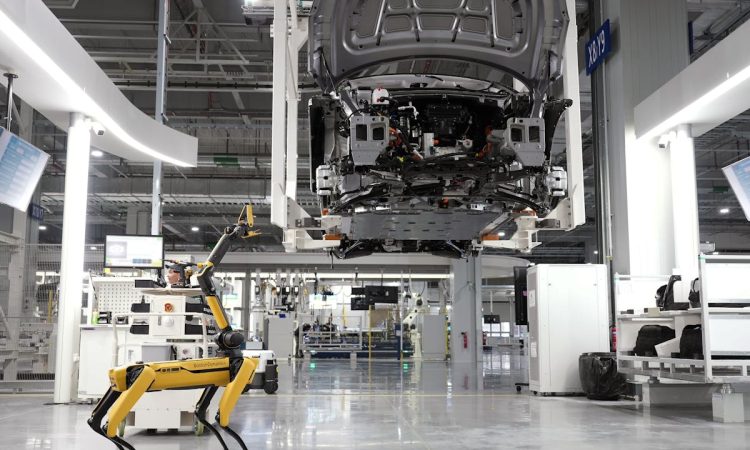
Modern manufacturing is undergoing a profound transformation as industries adopt advanced technologies to improve efficiency, quality, and productivity. One of the most impactful innovations driving this change is the use of AI-powered machine vision, which enables machines to “see,” analyze, and make decisions in real time. These systems, commonly referred to as Industrial Vision Systems, combine cameras, sensors, artificial intelligence, and image-processing algorithms to automate visual inspection and process control across manufacturing environments.
From automotive assembly lines to pharmaceutical packaging, industrial vision technology is redefining how manufacturers monitor production, detect defects, and optimize operations. As global competition intensifies and customers demand higher quality products, companies are increasingly turning to vision-based automation to stay competitive.
What Are Industrial Vision Systems?
Industrial vision systems are advanced inspection and automation technologies that use cameras, optics, and AI-powered software to capture and analyze images during production. These systems mimic the human visual process but operate with much greater speed, accuracy, and consistency.
In manufacturing environments, machine vision systems can perform tasks such as:
- Detecting product defects
- Verifying component placement
- Reading barcodes or labels
- Measuring dimensions and tolerances
- Monitoring assembly processes
- Guiding robots during manufacturing
Unlike manual inspection, these automated systems can analyze thousands of parts per minute while maintaining consistent accuracy. Manufacturers rely on solutions like Industrial Vision Systems to inspect parts, verify assemblies, monitor surface quality, and identify defects that might otherwise go unnoticed.
AI and Deep Learning: The Next Generation of Vision Systems
Traditional machine vision relied mainly on rule-based algorithms that required precise programming and consistent conditions. However, the introduction of artificial intelligence and deep learning has significantly enhanced the capabilities of industrial vision.
AI-powered systems can learn from large datasets of images to recognize patterns and detect abnormalities automatically. Instead of simply checking predefined rules, these systems analyze complex variations in shape, texture, lighting, or color.
For example, AI vision systems can:
- Identify cosmetic defects on products
- Detect subtle manufacturing flaws
- Distinguish between acceptable variations and true defects
- Classify products with highly similar visual features
Deep learning enables machines to learn by example, allowing vision systems to recognize subtle deviations from normal product conditions.
This capability is particularly valuable in industries where defect detection requires nuanced judgment, such as electronics manufacturing or pharmaceutical packaging.
Enhancing Quality Control and Product Consistency
Quality control is one of the most critical applications of industrial vision systems. In traditional manufacturing, product inspection often depended on human workers manually checking items on production lines. While humans are capable inspectors, fatigue, distractions, and high production speeds can lead to missed defects.
Vision systems eliminate these limitations by providing 24/7 automated inspection with consistent accuracy.
High-resolution cameras combined with AI algorithms can identify issues such as:
- Surface scratches
- Missing components
- Incorrect labels
- Misaligned parts
- Color variations
This real-time inspection allows manufacturers to identify problems immediately and correct them before defective products leave the factory.
Research shows that AI-driven vision systems significantly improve defect detection accuracy and minimize waste by identifying production problems early in the process.
As a result, manufacturers can maintain strict quality standards while reducing product recalls and customer complaints.
Increasing Manufacturing Efficiency
Another major advantage of industrial vision systems is their ability to improve production efficiency.
In high-speed manufacturing environments, manual inspection can slow down operations. Automated vision systems operate at the same speed as the production line, ensuring that quality checks never become a bottleneck.
These systems contribute to efficiency in several ways:
- Faster inspection: Vision systems analyze images in milliseconds.
- Reduced downtime: Automated detection identifies process issues early.
- Lower labor costs: Automation reduces reliance on manual inspection.
- Optimized workflows: Real-time production data helps improve processes.
By integrating vision systems with robotics and factory control systems, manufacturers can also automate tasks such as pick-and-place operations, component alignment, and assembly verification.
Supporting Industry 4.0 and Smart Factories
Industrial vision systems are a key component of Industry 4.0, the modern manufacturing paradigm built around automation, data connectivity, and intelligent machines.
In smart factories, vision systems are connected to other technologies such as:
- Industrial robots
- IoT sensors
- Manufacturing execution systems (MES)
- Data analytics platforms
This integration allows manufacturers to collect real-time production data and gain insights into machine performance, product quality, and process efficiency.
For example, AI-powered factories can automatically analyze production data and adjust machine settings to prevent defects before they occur. Vision systems also enable advanced automation, where robots rely on cameras to identify objects and perform precise tasks.
Applications Across Multiple Industries
Industrial vision systems are used across a wide range of industries due to their versatility and adaptability.
Automotive Manufacturing
Automotive manufacturers use vision systems for tasks such as inspecting welds, verifying component placement, and guiding robotic assembly.
Electronics Manufacturing
In electronics production, vision systems detect microscopic defects in circuit boards and verify the correct placement of tiny components.
Food and Beverage Industry
Vision systems ensure proper packaging, label verification, and contamination detection in food processing lines.
Pharmaceutical Manufacturing
Pharmaceutical companies rely on vision technology to verify pill packaging, inspect vial filling, and ensure compliance with strict regulatory standards.
Because these systems can be customized for specific manufacturing processes, they provide flexible solutions for both small-scale operations and large industrial facilities.
The Future of AI-Powered Vision in Manufacturing
As artificial intelligence continues to evolve, the capabilities of industrial vision systems will expand even further. Emerging technologies such as 3D vision, hyperspectral imaging, and generative AI are expected to unlock new possibilities for automated inspection and process optimization.
Future vision systems will likely feature:
- More advanced deep learning algorithms
- Real-time predictive analytics
- Fully autonomous production monitoring
- Greater integration with robotics and digital twins
These advancements will enable manufacturers to achieve higher levels of automation while maintaining strict quality standards.
Conclusion
Industrial vision systems are rapidly becoming an essential component of modern manufacturing. By combining advanced imaging technology with artificial intelligence, these systems enable factories to inspect products faster, detect defects more accurately, and operate more efficiently.
As industries continue to adopt smart manufacturing practices, the role of Industrial Vision Systems will only grow. Companies that invest in AI-driven vision technologies today are positioning themselves for a future defined by automation, precision, and intelligent production.